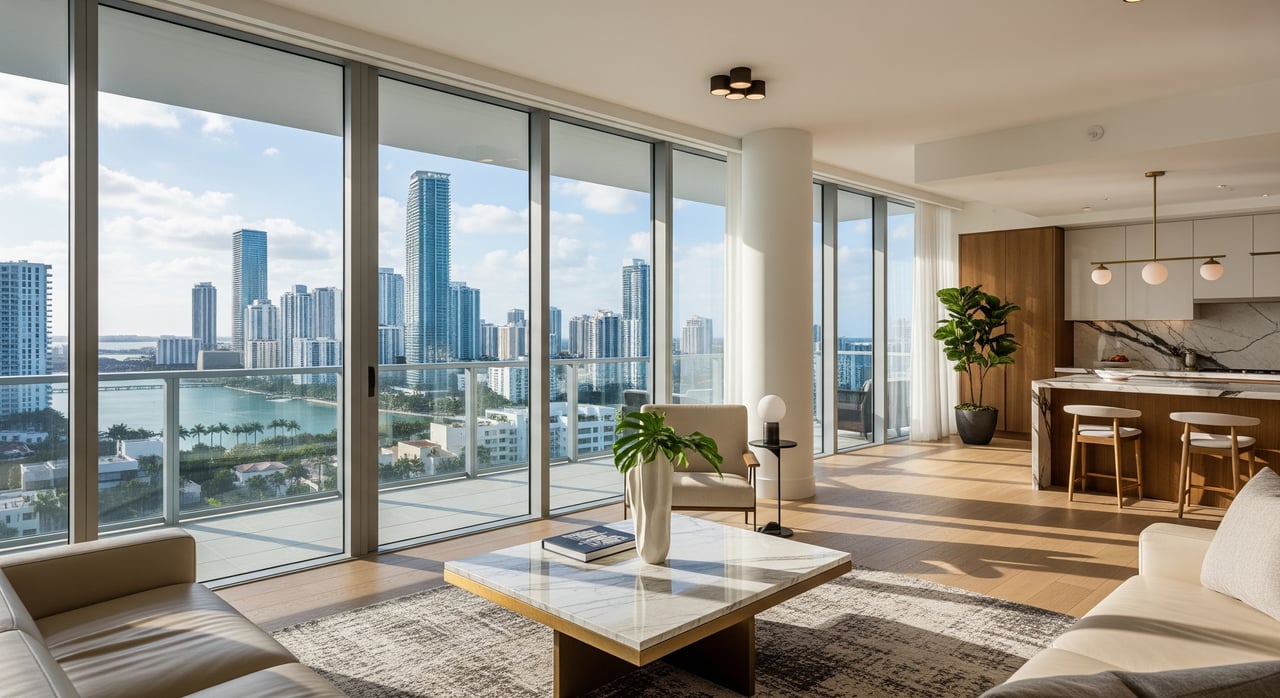
Foreign National Mortgage Guide for Brickell Condos
January 22, 2026
January 22, 2026
Buying a Brickell condo from abroad can feel complicated. You may be hearing different rules about down payments, building approvals, insurance, and what lenders will accept. You want a clear path to financing so you can focus on the right property and close with confidence.
In this guide, you’ll learn how foreign national mortgages work for Brickell high‑rise condos. You’ll see typical down payments, documentation, reserve requirements, rate expectations, and how condo project rules impact your loan options. You’ll also get a step‑by‑step plan and a look at in‑house and developer lending choices. Let’s dive in.
Brickell is a high‑rise, high‑density condo market with many units priced in jumbo territory. Lenders see more international buyers and investors here compared to other areas, which affects how they underwrite risk. Many buildings are waterfront or near the bay, so lenders closely review wind and flood exposure.
Since major condo incidents in South Florida and increased national scrutiny after 2021, lenders and insurers have tightened project reviews. This means your condo association’s financials, reserves, insurance, and building condition can directly shape your financing options and terms.
Several lender types commonly serve international buyers in Brickell:
Program types you might consider include foreign‑national loans, portfolio or non‑QM options with flexible documentation, and jumbo loans. Underwriting will also differ if the unit is a primary use, second home, or investment.
Down payment expectations vary by program and risk profile, but here are common ranges for condos purchased by foreign nationals:
Because many Brickell purchases exceed conforming limits, jumbo loans are common and can come with lower maximum loan‑to‑value ratios.
Lenders verify identity, income, assets, and the source of funds. Requirements vary by program, but most foreign national files include:
Having a complete, well‑organized package will speed up underwriting and reduce back‑and‑forth requests.
Reserve requirements are common and can be significant. Expect anywhere from 6 to 24 months of total monthly housing payments in reserves, depending on your residency, credit profile, loan program, and the project’s risk. Stronger reserves can help offset limited U.S. credit history.
Some lenders allow asset‑depletion underwriting, where liquid assets are converted into an imputed income stream to help you qualify. Debt‑to‑income thresholds vary, and portfolio or non‑QM lenders may allow higher ratios if supported by larger down payments and robust reserves.
Your unit must be financeable, and that comes down to the building’s status. Lenders assess the association’s litigation exposure, owner‑occupancy ratios, reserve health, budget, commercial space, and any single‑entity ownership concerns. Projects that meet standard agency rules are often called warrantable. If a building is non‑warrantable, you may need a portfolio or non‑QM lender, or more cash.
Post‑2021, lenders may request building reserve studies and inspection or engineering reports. Special assessments and pending repairs can make loans harder to approve. Insurance is also key. Many Brickell condos sit in areas where flood and robust wind coverage are required, so lenders will carefully review the building’s master policy.
The practical takeaway is simple: verify if the condo is lender‑friendly early in your search. Ask for HOA financials, budgets, minutes, reserve studies, and insurance certificates as soon as you are serious about a building.
Foreign national loans usually carry a rate premium compared to standard conforming loans. Depending on your down payment, program, and risk profile, the rate difference is often a few tenths of a percent up to around 1% or more. Fees can also be higher due to loan‑level adjustments, translation costs, and international wire requirements. Compare the APR and fee sheets across quotes, not just the rate.
Underwriting timelines can be longer because of document verification and translations. If you are buying a new construction unit, a developer’s preferred lender may offer a more streamlined process, but you should still compare pricing, rate lock options, and appraisal timing.
Plan early for currency transfers and foreign exchange costs. Large international transfers shortly before closing will be scrutinized, so keep clear records of the source of funds, including sale of assets or gift letters as needed.
If you plan to rent out your unit, remember that U.S. tax rules apply to rental income and filings. When you sell, FIRPTA withholding rules may apply. A qualified tax advisor can guide you, and some lenders may request an ITIN for tax reporting.
In‑house or developer preferred lenders can be helpful for new buildings. You might see:
Portfolio lenders and private banks offer flexibility as well, including alternative credit and asset‑based underwriting. Expect higher rates and fees compared to agency loans, but they can solve complex scenarios common with international buyers.
Use this checklist to organize your financing before you write an offer:
You deserve a single, coordinated team that understands coastal condos and international financing. Properties & Pads pairs local condo expertise with integrated mortgage loan origination and property management. That means you can shop the right buildings, compare lending paths, and hand off to management after closing without juggling multiple providers.
If you want a clear, fast path to a Brickell condo as a foreign national buyer, we’re ready to help you align the property, financing, and timeline.
Ready to explore options and get a tailored plan for your situation? Call or text Sean Greco to start the conversation.
Stay up to date on the latest real estate trends.


SoFi Real Estate - Location, Location, Location - Miami Beach Real Estate Buyers
Whether you’re buying, selling, or investing, Properties &c. offers a personalized, concierge-style approach backed by deep local expertise. Let’s turn your real estate goals into a success story.