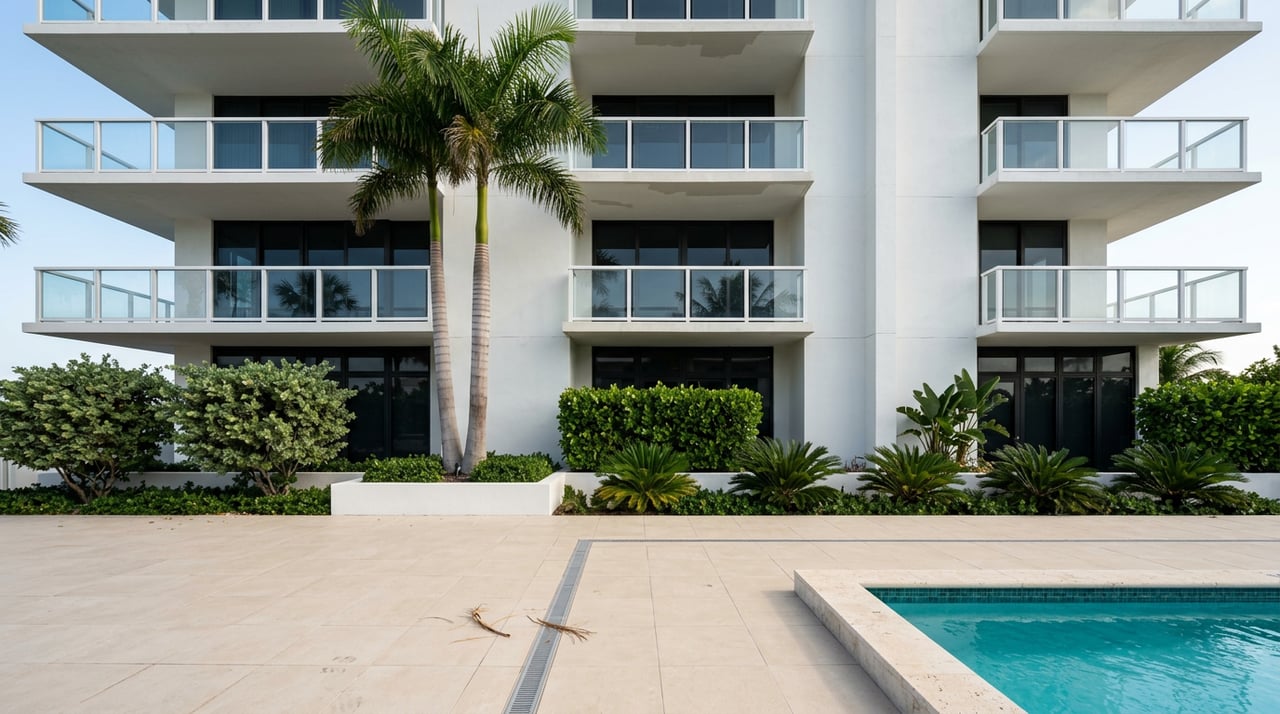
How Florida Condo Safety Laws Impact Bay Harbor Islands
March 12, 2026
March 12, 2026
You’ve heard about Florida’s new condo safety rules, but what do they mean for your Bay Harbor Islands condo today and when you decide to sell? If you own or plan to buy here, your budget, your timeline, and even your loan options can be affected. In this guide, you’ll get clear deadlines, the documents to collect, and how lenders look at buildings under the new framework. Let’s dive in.
After Surfside, state law added two linked requirements for buildings three stories or higher: periodic structural “milestone” inspections and a Structural Integrity Reserve Study (SIRS) that sets reserve funding for key components. These rules are designed to find structural issues earlier and ensure associations plan and fund major repairs. For Bay Harbor Islands owners and buyers, the key impact is practical. Inspections and the reserve plan flow into association budgets, special assessments, and loan approvals for unit sales.
Milestone inspections are required for condominium and cooperative buildings three stories or higher; they are due at 30 years of age (based on the certificate of occupancy) and every 10 years thereafter; local agencies may require a 25‑year initial inspection in coastal areas. If a building reached 30 years before July 1, 2022, the initial inspection had to be completed before December 31, 2024. If it reached 30 on or after July 1, 2022 and before December 31, 2024, the initial inspection must be completed before December 31, 2025. Your local enforcement agency issues the formal notice and can set penalties and repair timelines.
Milestone inspections run in two phases. Phase 1 is visual; Phase 2 adds testing if the engineer or architect finds substantial structural deterioration. Once noticed, Phase 1 must be delivered to the local authority within 180 days, and the sealed report plus an inspector‑prepared summary must go to the association and owners. The association must distribute the summary to unit owners within 45 days.
Associations controlling buildings three stories or higher must complete a Structural Integrity Reserve Study (SIRS) that covers specified structural components and provides a reserve funding schedule; owner‑controlled associations in existence on or before July 1, 2022 had a statutory SIRS deadline (see statute) and may in many cases coordinate the SIRS and the milestone inspection. A SIRS must address the roof, load‑bearing structure, fireproofing/fire protection, plumbing, electrical, waterproofing/exterior painting, windows and exterior doors, plus other qualifying items. It estimates remaining useful life, replacement costs or deferred maintenance expense, and a funding schedule designed to reach those costs in time.
Owner‑controlled associations existing on or before July 1, 2022 must complete their initial SIRS by December 31, 2025, and associations that must complete a milestone inspection on or before December 31, 2026 may complete the SIRS at the same time, but not later than December 31, 2026. Associations must report completion of a SIRS to the state within 45 days and make it available to owners. For budgets adopted after the statutory cutoff, most associations can no longer vote to waive reserve funding for SIRS items.
Bay Harbor Islands has its own Building Department that serves as the local enforcement agency. Miami‑Dade adapted its longstanding recertification program to line up with the state’s milestone timeline, and local materials explain that recertification can satisfy the state requirement when applicable. Because Bay Harbor Islands sits between Biscayne Bay and the Atlantic, local officials often apply the earlier 25‑year timeline to coastal buildings where warranted.
For a practical overview of how the Town coordinates state and county rules, review the Town’s Condo Workshop presentation. You’ll see the reporting expectations, who files what, and how local notices and county recertification history fit into the process.
Your building’s milestone findings and SIRS funding plan drive annual assessments, whether a special assessment is needed, and if the association pursues a loan or line of credit. Smaller, boutique waterfront buildings common in Bay Harbor Islands have fewer owners to share large capital projects. As a simple example, a $2,000,000 concrete restoration equals about $100,000 per unit in a 20‑unit building, but $50,000 per unit in a 40‑unit building. That math shapes budgets and listing conversations.
Lenders look closely at reserves, special assessments, and deferred maintenance. Fannie Mae’s condo eligibility requires adequate reserves or a recent reserve study that supports a different contribution, plus disclosure of assessments or association borrowing. FHA guidance generally expects either a project reserve funded at roughly 10% of assessments or a reserve study to justify less. Buildings with critical, unaddressed repairs or thin reserves can face limited conventional or FHA/VA options, which may push buyers toward portfolio or non‑warrantable loans at higher rates or down payments.
Recent reporting shows many Florida associations are increasing fees and levying special assessments in response to inspection and reserve requirements, and some owners have sold because they could not absorb the higher costs. You can read this context in Associated Press coverage of South Florida impacts. Actual amounts vary by building and scope of work.
Florida law permits several ways to fund SIRS items and milestone‑related repairs. Associations can increase regular assessments, levy a special assessment, or obtain a loan or line of credit, with notice and vote requirements set by statute. Recent updates allow, under conditions, a temporary two‑budget‑year pause in reserve contributions for budgets adopted on or before December 31, 2028 if the board and owners prioritize immediate milestone‑recommended repairs. An updated SIRS is required before regular reserve contributions resume.
Buyers must be given the inspector‑prepared summary and the SIRS (if applicable) as part of the resale disclosures required by state law, and contracts after December 31, 2024 must include the statutory disclosure/voidability language. To reduce surprises and help your loan approval stay on track, request and review:
For filing expectations, owner access to reports, and reporting portals, see the state’s DBPR Division of Condominiums FAQ.
These are illustrations. Your actual numbers depend on the engineer’s scope, bids, and the association’s credit terms.
Want help reading a SIRS, pricing a sale, or structuring financing in today’s rules? Tap a local, integrated team that handles brokerage, property management, and mortgage origination. Call or text, and let’s simplify your next move with Sean Greco.
Stay up to date on the latest real estate trends.

SoFi Real Estate - Location, Location, Location - Miami Beach Real Estate Buyers
Whether you’re buying, selling, or investing, Properties &c. offers a personalized, concierge-style approach backed by deep local expertise. Let’s turn your real estate goals into a success story.